A captive elephant in Thailand can carry tourists on its back for up to 6 hours a day, and a 2020 World Animal Protection review of 3,837 individuals across Asia found that roughly 63% were kept in what researchers classed as severely inadequate conditions. That single statistic changed how editors on our team book anything involving animals. Wildlife is the fastest way to feel like a trip mattered, and it is also the fastest way to fund something ugly if we do not slow down and ask a few sharp questions.
This guide is the checklist we now use before we hand over a credit card for any experience that involves an animal, from a savannah drive in Kenya to a snorkel with rays in the Maldives.
What ethical wildlife tourism actually means
Ethical wildlife tourism is not a certificate you can print. It is a pattern of behavior: the animals set the pace, the humans stay at a distance, and the money supports habitat rather than performance. The Global Sustainable Tourism Council industry criteria spell this out in section D3, requiring that wildlife interactions “do not produce adverse effects on the viability and behavior of populations in the wild.” That is the bar we hold operators to.
The pattern to watch for is simple. Ethical operations restrict numbers, keep vehicles or boats at set distances, and never guarantee a sighting. Exploitative ones promise contact, feature riding, bathing, or hand-feeding, and run on a fixed timetable regardless of the animal’s mood.
Sanctuaries versus shows: the tell is contact
The word “sanctuary” is unregulated in most countries, which is why it appears on the sign of both a genuine rescue and a roadside zoo. The single most reliable filter is contact. If tourists ride, bathe, hold, or pose with adult wild animals, it is a show, whatever the branding says.
Elephant Nature Park in Chiang Mai, Thailand, moved to a strict no-bathing, no-riding, observation-only model in 2020, and it remains one of the clearest examples of the sanctuary standard. Compare that to venues that still advertise “elephant washing” for around 1,500 to 2,500 baht per session. The animals in the second category typically endured phajaan, a weeks-long breaking process, before ever seeing a tourist.
Elephant rides, dolphin swims, and the encounters we no longer book
Some experiences are structurally impossible to run ethically at tourism scale. Riding is the clearest example. An adult Asian elephant weighs 2,700 to 4,000 kg, and while it can carry weight, the spine is not built for the constant vertical pressure of a howdah chair. Veterinary reviews consistently flag spinal damage and foot infections in ride-work animals.
Captive dolphin swims fall in the same category. A bottlenose dolphin in the wild travels 40 to 100 km a day. A concrete lagoon of 25 by 15 meters cannot replicate that, and the stress markers (stereotypic swimming, reduced lifespan) are well documented. The WWF review of cetacean captivity is a plain-English starting point if a family member is still on the fence.
What we book instead
- Land-based whale watching from marked headlands (Iceland, the Azores, Kaikoura).
- Boat operators who follow the 100-meter approach rule and cut engines when animals are within 50 meters.
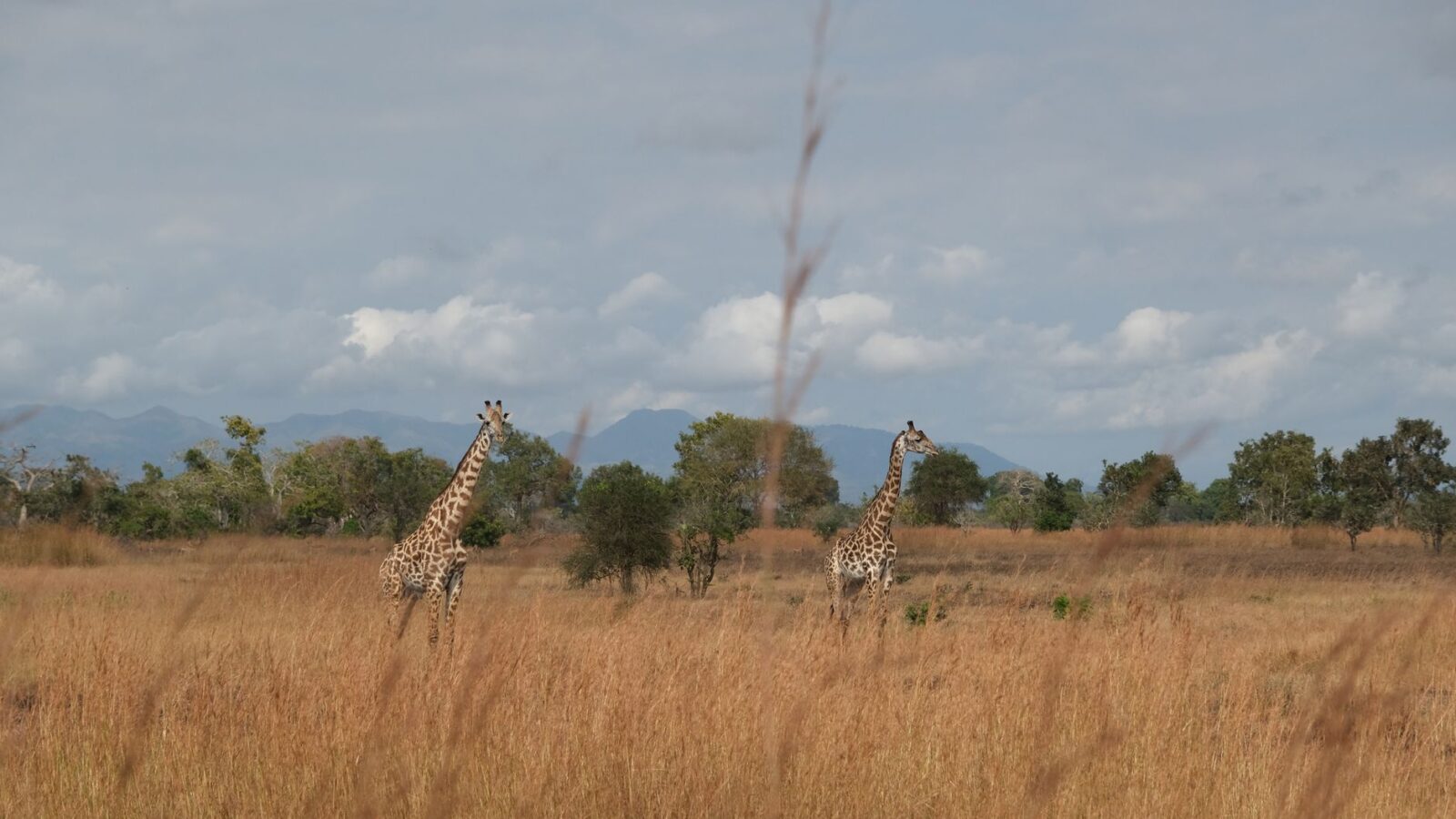
- National-park elephant viewing from vehicles, such as in Udawalawe in Sri Lanka, where sightings are wild and unscheduled.
Safari norms: what a good operator actually does
A well-run East African safari looks boring on paper, and that is the point. Vehicles hold to 25 km/h in the presence of animals, keep to designated tracks, and cap at 5 vehicles per sighting under Kenya Wildlife Service guidance. Guides are silver-level certified through the Kenya Professional Safari Guides Association, or the equivalent FGASA level in South Africa.
Ask three questions before you pay a deposit:
- What is your maximum number of vehicles per sighting, and who enforces it?
- How long does your driver stay with a single animal or pride?
- What percentage of your park fees goes back to the community conservancy?
A confident operator answers all three in one email. A vague answer, or a pivot to how many big-five sightings you are “guaranteed”, is the signal to walk. For broader context on how these decisions ripple into local economies, our piece on community-based tourism is worth a read before you compare quotes.
The questions that filter out 80% of bad bookings
Quick checklist before you book
- Is any physical contact with adult wild animals part of the experience? If yes, decline.
- Are sightings guaranteed? If yes, decline. Wild animals are not on schedule.
- Does the operator name a specific conservation partner, with a percentage of revenue?
- Are group sizes capped in writing? Under 8 for boat trips, under 6 for walking safaris.
- Is the enclosure or territory sized appropriately? For big cats, look for 10+ hectares per individual.
- Does the venue breed animals for public display? Breeding for release into monitored wild habitat is different from breeding for gate revenue.
Quick comparison table
| Experience | Usually ethical | Usually not |
|---|---|---|
| Elephants | Observation-only sanctuaries, national park drives | Rides, bathing, painting shows |
| Cetaceans | Wild whale watching with 100 m rule | Marine park swims, dolphin kisses |
| Big cats | Fenced reserves over 10 ha, no cub contact | Cub petting, walk-with-lions tours |
| Primates | Permit-limited gorilla trekking (Rwanda caps at 96 permits per day) | Monkey temples with feeding stalls |
| Marine turtles | Beach patrols with a licensed biologist | Hatchery photo ops with handling |
Photography, feeding, and the small choices that add up
Feeding wild animals, even “just a banana”, habituates them to humans and shortens their lives. In Bali’s Ubud Monkey Forest, the macaque population roughly doubled between 2010 and 2019, and aggressive incidents rose with it. The animals learned that bags mean food.
Photography rules we follow: no flash within 20 meters of any wild animal, no drones over nesting sites, no baiting for a shot. Our guide to photographing people and places respectfully extends the same principles to wildlife. And if a guide offers to “call” an owl or a leopard with a recording, that is playback bait, and it stresses territorial species; we ask them to stop.
Where your money should land
An entry ticket to a national park in Costa Rica is around $16 for foreign adults, and a meaningful share flows to SINAC, the park service. A private “wildlife encounter” venue may charge $80 with almost nothing returning to conservation. If cost feels close, the park almost always wins on both experience and impact. Pair the park visit with an operator listed in our notes on supporting local businesses, and the multiplier goes further.
Being a good visitor also means not swamping fragile places. Our piece on overtourism covers timing, and our respectful tourism primer covers behavior on the ground. Together they cover most of what a first-time safari or dive traveler needs.
One last honest note
We have booked things we regret. An editor rode an elephant in 2011 before the research was widely translated, and another swam with captive dolphins on a family trip in 2015. Owning those choices is part of why this checklist exists. The goal is not purity, it is progress: better questions, better operators, better outcomes for the animals whose homes we are visiting.
Frequently asked questions
Is gorilla trekking in Rwanda or Uganda actually ethical given the $1,500 permit price?
Yes, when done through the official park systems. Rwanda caps permits at 96 per day and limits each group to 8 tourists for a strict 60-minute viewing window at 7 meters distance. Around 10% of permit revenue flows to community projects around Volcanoes National Park, and the mountain gorilla population has grown from roughly 480 in 2010 to over 1,060 today, largely funded by this model.
How do I tell if a marine sanctuary is real when snorkeling with sharks or rays?
Look for three signs: no feeding stations, no touching allowed, and group sizes under 8 per guide. Real marine protected areas like Belize's Hol Chan or Palau's Rock Islands enforce these with fines from $250 upward. If the operator advertises hand-feeding or promises a shark encounter within 30 minutes, the animals are being baited, and you should book elsewhere.
Are volunteer wildlife programs, like lion cub raising, ethical?
Almost never. Cub-petting operations, especially in South Africa, typically funnel animals into the canned hunting industry once they age out at around 18 months. Legitimate volunteer conservation work involves habitat restoration, camera-trap monitoring, or veterinary support, and rarely offers hands-on contact with charismatic species. If the program's photos feature volunteers cuddling animals, walk away.
What should I do if I only realize an experience is exploitative once I'm already there?
Do not participate, ask for a refund citing welfare concerns, and report the venue afterward to World Animal Protection or the local tourism board. Leaving a specific, factual review (mentioning contact allowed, group sizes, or animal condition) helps more travelers make informed choices. Some editors on our team also donate the refund amount to a vetted rescue such as Elephant Nature Park to close the loop.