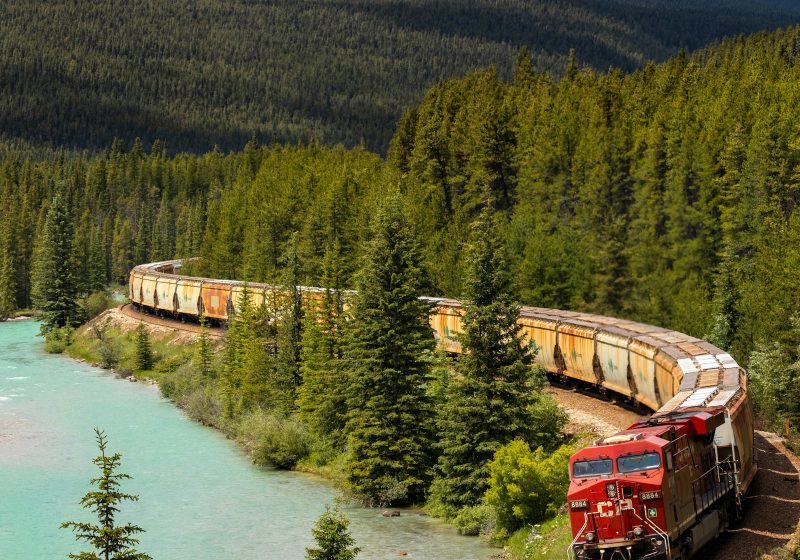

The average round-trip transatlantic flight from London to New York produces about 986 kg of CO2 per economy passenger, according to Our World in Data. That is roughly the same as a family of four running their fridge for a year. So when someone asks us where to start with sustainable travel, we have a slightly boring answer: pick somewhere you can reach by train, bus, or a tank of fuel. Your first eco-trip in your country will teach you more than a carbon-offset website ever will.
We are not anti-flying, and we are not asking anyone to feel guilty about a bucket-list trip already booked. We are saying that if you want to actually learn the habits, gear choices, and small decisions that make travel lower impact, doing that experiment 200 km from home is safer, cheaper, and more honest than doing it 8,000 km away.
Why domestic wins the first round
Three reasons keep coming up when editors on our team compare notes with readers.
First, the emissions math is friendlier. A short-haul flight under 1,500 km emits around 246 g of CO2 per passenger kilometer, while a European high-speed rail journey sits closer to 14 g, per Our World in Data’s transport dataset. Even a fully loaded diesel car with two people typically beats a solo economy flight over the same route.
Second, the feedback loop is faster. If your reusable coffee cup leaks in the seat pocket of an Amtrak Northeast Regional, you find that out on Tuesday and buy a better one on Wednesday. If it leaks in your carry-on somewhere over Iceland, you learn nothing except regret.
Third, mistakes are cheaper. A wasted weekend at a badly chosen “eco-lodge” two hours from home costs maybe $180. The same mistake in Costa Rica costs $2,400 and a lot of unusable Instagram content.
The learning curve nobody warns you about
Sustainable travel involves a stack of small skills: reading between the lines of hotel marketing, packing for a week without disposable toiletries, finding refill water on the road, using regional transit apps, understanding which “carbon neutral” claims mean something. Trying to acquire all of that at once, in a country where you do not speak the language, is the fastest route to giving up.
Our Sustainable Travel 101 guide walks through the underlying principles, but the practice has to happen somewhere. A domestic trip is the practice run.
A quick emissions comparison
Here is roughly what a 4-day trip for two people looks like across three options, using averaged figures from the IEA and national rail operators.
| Trip type | Round-trip distance | CO2 per person | Approx. cost per person |
|---|---|---|---|
| Domestic train, 2 nights small hotel | 600 km | ~18 kg | $220 |
| Domestic drive (hybrid, 2 people) | 900 km | ~55 kg | $260 |
| Short-haul flight, 3 nights resort | 2,400 km | ~590 kg | $740 |
The domestic train option is not just lower emissions. It is about a third of the price, and it lets you spend the travel time reading rather than queuing at a gate.
Picking the right domestic destination
Not every domestic trip is automatically a good eco-trip. A weekend of driving 500 km to a cabin without insulation and eating imported food is not exactly a win. When we help readers plan, we look for four things.
Reachable without a plane
Ideally 2-6 hours door to door by train, bus, or car. In the US, that might mean New York to the Hudson Valley, Chicago to Milwaukee, or LA to Santa Barbara. In the UK, London to the Peak District via a 2-hour train. In Germany, almost anywhere on the ICE network.
Public transit at the destination
The US National Park Service lists parks with shuttle systems, including Zion, Acadia, and Grand Canyon. Those are much easier to visit low-impact than parks where a rental car is mandatory.
Independent lodging over chain resorts
Smaller inns and B&Bs tend to have shorter supply chains and less linen waste. Our guide on how to find genuinely green hotels covers the certifications that actually mean something.
A local food scene
A destination with 3-4 restaurants sourcing regionally beats one with a single “farm to table” spot surrounded by chains.
A planning template that fits on one page
We use a version of this with readers who ask for help. It takes about 45 minutes to fill in.
- Budget: Set a hard number, then decide what percentage goes to lodging vs food vs activities. A common split is 45/30/25.
- Distance rule: Draw a 400 km radius around your home. Pick 3 candidate destinations inside it.
- Transport check: For each, look up the lowest-emission realistic option. If it involves more than one connection, note the total travel time.
- Lodging shortlist: Find 2 places per destination with either a recognized certification or clear, specific sustainability practices (heat pumps, greywater, on-site composting).
- Local transit: Confirm you can get from arrival station to lodging without a taxi, or accept the taxi as a known trade-off.
- Food plan: Identify 2 restaurants and 1 grocery store or market for self-catered meals.
- Pack list: Use our reusable travel gear essentials as a starting point.
- Review after: Write down what worked and what did not, within 48 hours of getting home.
Quick checklist
- Stay within a 400 km radius for the first trip
- Choose train or bus if the total time is within 90 minutes of driving
- Book 2 nights minimum, so travel emissions are spread across real days
- Pack one refillable bottle (Klean Kanteen, Hydro Flask, or similar) per person
- Skip daily housekeeping if the hotel offers the option
- Save receipts and note anything you would change next time
What a first domestic trip actually teaches you
The lessons are unglamorous. You find out that a bamboo toothbrush works fine but the bristles fray after 10 days. You realize that a 40 L backpack is enough for 4 days if you plan laundry once. You notice that skipping the buffet breakfast and walking to a bakery costs less and produces less waste. You learn which of your habits survive a train delay.
Once those habits are stable, a bigger trip stops feeling like a leap. You can plan a two-week rail journey across France, or a longer flight with cleaner choices on the ground, and know the small decisions are already automatic. Our guide on planning your first eco-friendly trip and the piece on common mistakes beginners make are both worth reading before that step, but neither replaces one honest weekend of practice close to home.
Start small, take notes, and let the next trip be the ambitious one.
Frequently asked questions
Is a domestic road trip actually greener than a short flight?
Usually yes, if you have at least two people in the car. A modern hybrid with two passengers averages around 55-70 g of CO2 per passenger km, while a short-haul flight sits near 246 g. Solo driving in a large SUV can approach flight emissions, so occupancy matters. For distances under 800 km, a train almost always wins if it exists on your route.
What if I live somewhere with almost no public transit?
Focus on the destination and duration rather than the transport mode. A 3-4 night stay 200 km away in a well-insulated small inn, using one tank of fuel, has a smaller total footprint than a weekend fly-in trip. Carpool if you can, and pick a walkable town center so the car sits parked once you arrive.
How do I know if a domestic eco-lodge is real or just marketing?
Ask two specific questions before booking: what heating system do they use, and how do they handle wastewater. Vague answers usually mean the sustainability page is decorative. Certifications from GSTC-recognized bodies or Green Key are meaningful signals, and independent guest reviews on non-booking sites often mention water pressure, food sourcing, and waste practices honestly.
How long should a first domestic eco-trip be?
We suggest 3-4 nights. Anything shorter and the travel-day emissions dominate the total, plus you do not get enough repetition to test new habits. Anything longer than a week and it starts to feel less like an experiment and more like a full vacation, which raises the stakes on decisions you have not practiced yet.