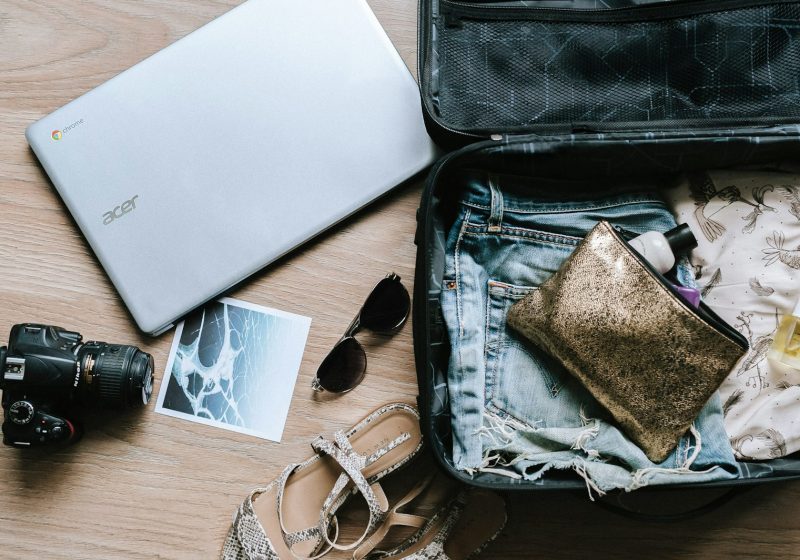
Last spring, one of our editors weighed her carry-on before a 17-day trip through Portugal and northern Spain: 8.4 kilograms, including a laptop. Inside were 11 clothing items. She wore all of them, twice or more, and never once thought, “I wish I had packed that fourth shirt.” That is the promise of a travel capsule wardrobe, and it is also where most guides quietly lie to you. A good capsule is not a fashion project. It is a math problem with fabric.
We have been testing capsule builds across editors on our team for four years, from a February week in Reykjavik to a monsoon-soaked stretch in Kerala. What follows is what we would tell a friend before her next long trip, without pretending fabric science is more glamorous than it is.
What a capsule actually is (and is not)
A travel capsule wardrobe is a small set of clothes, usually 8 to 14 pieces, chosen so that any top works with any bottom, any layer works with any base, and every item earns at least three wears per trip. The goal is not aesthetic uniformity. It is combinatorial coverage: 3 tops and 3 bottoms in a shared palette yield 9 outfits before you add a dress or a second layer.
What a capsule is not: an excuse to buy nine new “travel” pieces before you leave. Roughly 92 million tons of textile waste are generated globally each year, according to UNEP’s Alliance for Sustainable Fashion, and travel-specific “technical” clothing is one of the fastest-growing corners of that pile. The most sustainable capsule uses items you already own.
The 5-3-2 framework we keep coming back to
After enough spreadsheets, we landed on a starting ratio for a 7 to 21 day trip in one climate band:
- 5 tops: 2 base layers (short sleeve), 2 mid layers (long sleeve or button-up), 1 slightly dressier piece.
- 3 bottoms: 1 versatile pant, 1 lighter option (shorts, skirt, or lighter pant), 1 that can pass for “nice dinner.”
- 2 outer layers: 1 warmth layer (fleece or wool cardigan), 1 weather layer (packable rain shell).
Add underwear for 5 to 7 days, 2 to 3 pairs of socks, sleepwear that doubles as a lounge layer, and 2 pairs of shoes (one walking, one lighter). That is 15 to 18 items total, everything visible at once when laid on a hotel bed.
Fabric is the whole game
Every capsule succeeds or fails on what the fabric does after 8 hours of wear. Here is the honest comparison we give friends:
| Fabric | Dry time (hand-wrung) | Odor resistance | Honest tradeoff |
|---|---|---|---|
| Merino wool (150-200 gsm) | 6-10 hours | Excellent, 3-5 wears | Pricey, thin knits pinhole after 40-60 wears |
| Linen | 2-4 hours | Good | Wrinkles instantly, needs layering below 18C |
| Tencel / Lyocell | 3-5 hours | Good | Softens with wash, less structured over time |
| Cotton jersey | 10-16 hours | Fair, 1-2 wears | Cheap and comfortable, but heavy when damp |
| Recycled polyester | 1-3 hours | Poor without treatment | Sheds microplastics, per IUCN marine plastic research |
Our practical rule: build the tops and socks in merino if the budget allows, keep bottoms in a mid-weight cotton-linen blend or Tencel, and reserve synthetics for the rain shell and one quick-dry base layer. Patagonia’s Capilene Cool Merino line publishes garment weights and a repair guarantee on their materials transparency page, which is a reasonable benchmark for what “honest specs” look like.
Building yours in six steps
- Pick a two-color base and one accent. Navy and olive with a cream accent is a workhorse. Black and charcoal with rust also works. Every piece must play with the other two.
- Audit your closet first. Lay out everything you might bring. Remove anything you have not worn in 90 days.
- Choose the hardest piece first. Usually the “dressier dinner” outfit. If it does not also work on a train at 6 a.m., cut it.
- Test the 3×3 grid. Photograph each top with each bottom. If any combination looks wrong, one of the two pieces is off.
- Wear it for 72 hours at home. This is the step almost no one does. It surfaces itch, chafe, and the sweater that pills after one wash.
- Weigh the pile. Aim for under 4.5 kilograms of clothing for a two-week trip. If you are over, one piece is redundant.
For the packing mechanics that go with this, our companion piece on the minimalist carry-on packing guide covers compression, weight distribution, and what fits in a 40-liter bag.
Laundry is part of the design
A capsule assumes you will wash things on the road. Plan for it. In Lisbon, self-service laundry averages 6 to 8 euros per load; in Tokyo, coin laundromats run 400 to 500 yen. Sink laundry with a small tube of solid detergent works for merino tops and underwear, and a merino T-shirt hand-wrung in a hotel towel will typically dry overnight if the room is above 18C.
The corollary: skip anything that requires special washing. If a piece says “dry clean” or “cold wash separately,” it does not belong in a travel capsule. We cover the broader gear side of this in our reusable travel gear guide, and the specific climate variations in climate-appropriate packing.
The honest tradeoffs
Nothing about capsule dressing is free. Here is what we tell people upfront:
- You will wear the same three shirts in every trip photo. If that bothers you, this system is not right for you.
- Merino costs 3-5 times what a cotton tee costs. The math works out around trip 8 or 9 if you actually use it.
- You will occasionally be underdressed. Once a trip, probably. A silk-blend scarf, roughly 90 grams, fixes 80% of these moments.
- You will still overpack the first two attempts. Editors on our team all did.
Quick checklist
- Cap the wardrobe at 15 to 18 items total, including shoes and underwear
- Two-color palette plus one accent, no exceptions
- Weigh the clothing pile: under 4.5 kg for two weeks
- Merino for tops and socks, natural blends for bottoms, synthetics only for shells
- Confirm laundry access every 5-7 days at your destination
- Skip anything requiring dry cleaning or a delicate cycle
- Wear the full kit for 72 hours at home before you fly
Where a capsule fits into the wider trip
A capsule wardrobe is one piece of a lower-impact trip, not the whole point of one. It pairs naturally with slow travel choices, since fewer transfers means fewer chances to lose or replace clothing, and it dovetails with the packing mistakes that create waste we hear about most often, mostly single-use toiletries and impulse buys at the airport.
Build once, wear it for three or four trips, mend it when it wears, replace pieces one at a time. That is the version of this that actually holds up.
Frequently asked questions
How many days can I realistically travel with a 10-piece capsule wardrobe?
With merino tops and one laundry cycle every 5-7 days, a 10-piece capsule (say, 4 tops, 3 bottoms, 2 layers, 1 dress or dressier piece) comfortably covers 10 to 21 days in a single climate band. Beyond three weeks, we usually add one extra base layer and a second pair of socks rather than more outfits. The bottleneck is almost never variety, it is laundry access.
Is merino wool really worth the price for one trip?
For a single one-week trip, probably not. A merino T-shirt runs about 60 to 110 USD compared to 15 to 25 USD for cotton. The math tips in merino's favor around trip 8 or 9, since the odor resistance means fewer washes (150 to 200 lifetime washes for good merino), and each wash cycle is a slow fabric death. If you travel two or three times a year, buy one merino piece per year and rotate in.
What about hot and humid climates where wool feels wrong?
Lightweight 150 gsm merino actually performs well up to about 32C because it wicks and dries fast, but linen and Tencel blends feel better psychologically in that range. For a monsoon trip or anywhere above 85% humidity, we swap two merino tops for linen or a linen-cotton blend and accept that everything will feel slightly damp anyway. The rain shell becomes non-negotiable, not optional.
Can a travel capsule wardrobe work for business trips with client meetings?
Yes, with a tighter palette. Stick to navy or charcoal as the base, add one merino blazer or structured cardigan (around 300 to 400 grams), and choose bottoms that hold a crease, such as wool-blend trousers rather than linen. A packable silk-blend scarf or tie handles the formality gap. We have run 5-day conference trips on 9 pieces, though shoes usually push you to a second pair.