Travel photos are now central to how most people remember and share trips. They can also be the most consistently disrespectful thing tourists do without realizing it. A few principles transform the relationship between camera, photographer, and subject.
Always ask before photographing strangers
The single most important rule. A smile, a gesture toward the camera, and waiting for a nod. People deserve agency over their own image. In some places (parts of Africa, indigenous communities) photographing without permission can also cause serious offense or community problems.
Religious sites: follow the posted rules
Most churches, temples, mosques, and shrines have clear photo policies. Some don’t allow photos at all; some don’t allow flash; some restrict photos in specific areas. Read the signs and follow them. The rules exist because they’re needed.
For more on this, see our companion piece on How to Support Local Businesses While Traveling (Without Overthinking It).
Children require extra care
Always ask the parent, not the child. Many cultures are especially protective of children’s images. Take the photo only if both parent and child are clearly comfortable. Don’t share children’s faces on social media, even with parent permission, your followers haven’t agreed.
Don’t photograph people working or in distress
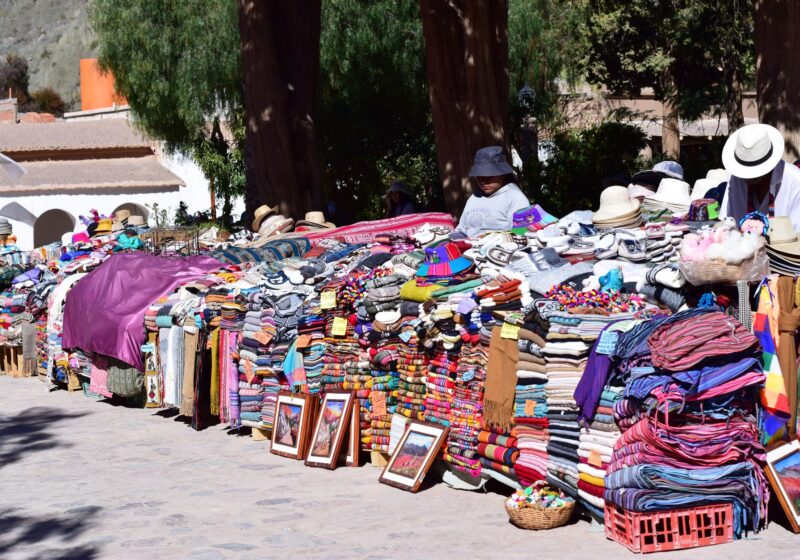
Street vendors, farmers, fishermen, they’re at work, not posing for content. Begging communities, people in poverty, scenes of distress, photographing these without permission turns hardship into spectacle. Ask, pay if appropriate, and skip the photo if discomfort is evident.
Photo ethics in practice
- Ask before photographing strangers
- Respect “no photo” signs at religious sites
- Don’t use flash at sites that prohibit it
- Don’t photograph children without parent permission
- Pay buskers and street performers if you photograph them
- Don’t share photos that could embarrass subjects
- Avoid photographs that romanticize poverty
- Don’t block traffic for selfies
- Don’t enter restricted areas for “the shot”
- Geotag carefully, popular geotagging can damage fragile sites
If you want to go deeper on a related angle, our piece How to Engage With Local Communities Respectfully (Beyond Surface Tourism) picks up where this one leaves off.
The phone-out moment
Many of the best travel moments happen without a camera in the way. Putting the phone down, observing, being in the place, these often produce stronger memories than the photo would have. Reach for the camera less reflexively.
What this looks like on a Tuesday in a new city
Three concrete examples pulled from trips we ran this year. They are drawn from real journeys, edited together so we can share specifics.
The slow market morning
Three mornings in a row at the same café near the central market. By the third morning, the staff greet you by name. You buy bread, cheese, and fruit at three different stalls. The vendors recognize you the second day. The trip becomes a relationship with a neighborhood rather than a tour of a city.
The cooperative-bought souvenir
A purchase from a verified weaving cooperative. The artisan you bought from explains the technique. The price is fair, the conversation longer than any transactional moment of the trip. The textile hangs in your home for years afterward, a quiet reminder of a specific person and a specific morning.
The return trip
A second visit to a small city you fell in love with the first time. You stay at the same guesthouse. The owner brings out the photo you sent her last year. The local restaurant you loved is still there; the chef remembers your favorite dish. Return travel is the deepest form of ethical engagement.
The compound effect over multiple trips
Respect is what you do when no one is watching. Lowering your voice in a residential street. Letting people pass. Not photographing without consent. Tipping the housekeeper. These small habits, repeated across thousands of guests, build a reputation that follows travelers from your country to the destination, for better and for worse. We all carry that reputation collectively.
There’s a measurable economic argument too. Tourism is one of the largest industries in the world, and how it routes money matters. Studies consistently show that locally-owned businesses retain 60-70% of every dollar in the local economy. International chains retain 10-20%. The choice between these two for your accommodation, your meals, and your shopping is the single largest economic lever you have on a trip.
A small line for your notes app
The single best thing you can do for a destination is return. Repeat visits build relationships, accumulate knowledge, and route real money to the same places year after year. The first visit is exploration; the second is connection; the third becomes something more like belonging. Repeat visits to one or two places are often the highest-impact sustainable travel pattern available to a traveler.
A parting note for the road
Travel changes when the small practices become invisible. The reusable bottle isn’t a virtue; it’s a default. The local restaurant isn’t a choice; it’s where you eat. The longer stay isn’t a sacrifice; it’s the reason the trip felt different. That’s the destination of sustainable travel, not a single ethical posture but a quieter, deeper way of moving through the world.
Want to keep reading? Try Green Certifications Explained: A Practical Guide for Travelers next, it’s one of the most-read pieces we’ve published on this theme.
Frequently asked questions
Can I take photos of crowds without asking?
Generally yes, public spaces with no specific subject are normal. The issue is when one identifiable person becomes the subject. Crowd shots are usually fine; close-ups need consent.
What if someone asks for money after photographing them?
Pay it. If you used their image, especially without explicit permission, payment is fair. Carry small bills for these situations.
Is sharing locations on social media bad?
It can be. Some fragile destinations have been damaged by viral social media exposure. Be thoughtful about which locations you tag specifically.
What about street photography?
Different cultures have different acceptance levels. In some major cities (New York, London) it's accepted. In others, less so. Read the room.
Are professional photo tours ethical?
Some are. Quality tours emphasize consent, payment, and relationship-building. Cheap photo tours that put cameras in subjects' faces are not ethical.