Most travelers go through three backpacks before they find one they actually love. Each rejected bag becomes either landfill or the bottom of a wardrobe. There is a better path: clarify what you actually need before you ever set foot in a store, and the right bag becomes obvious.
Start with how you actually travel
A weekend traveler needs different gear than a digital nomad. Be honest about your typical trip length, your usual climate range, whether you fly or train, and how much you walk between accommodations. The 35-45 liter range covers nearly everyone who travels for under three weeks at a time. Above that, you’re probably overpacking.
The single most important feature
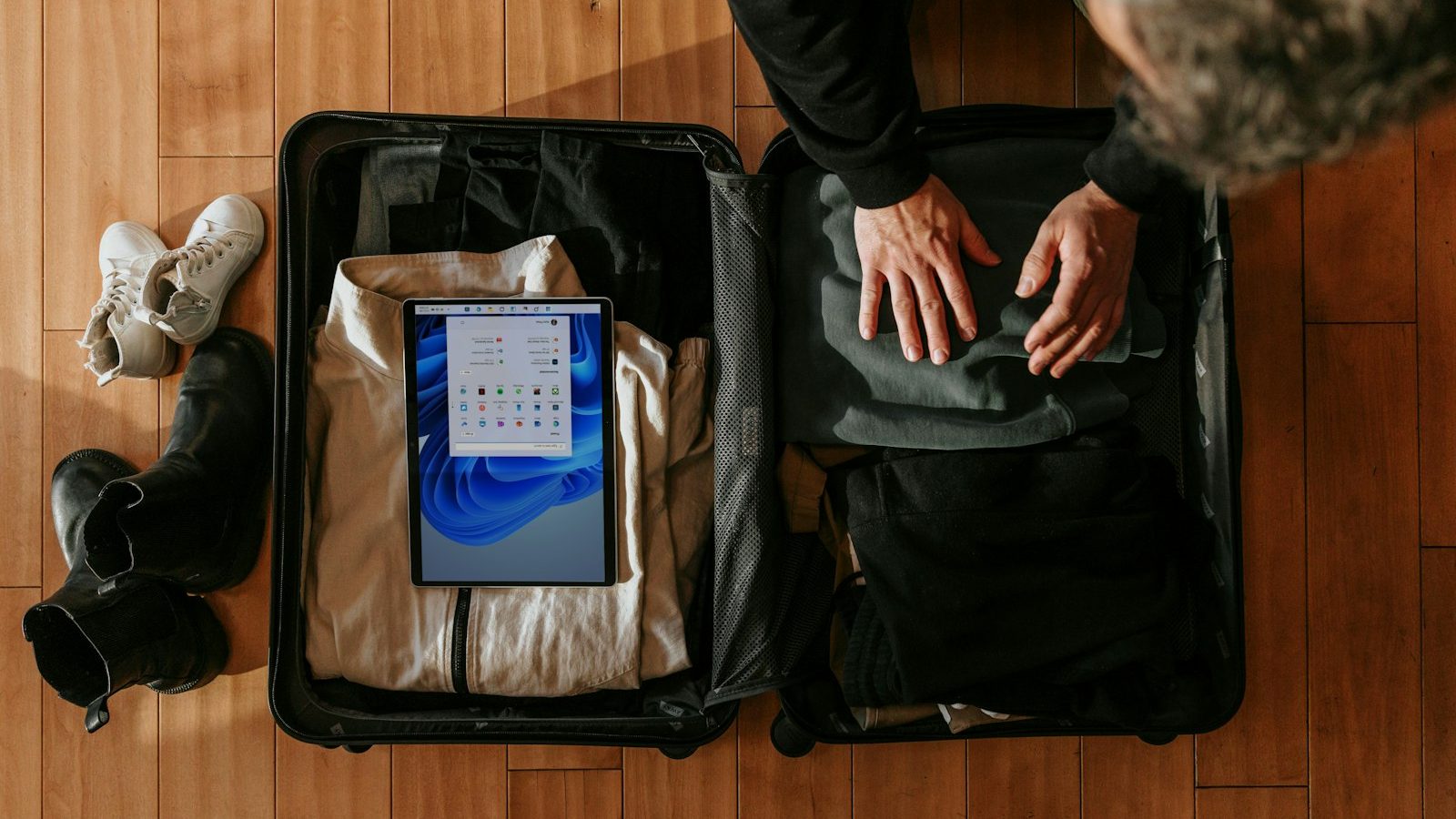
A genuine clamshell opening, where the bag opens flat like a suitcase, not just a top-loading drawstring, is the difference between organized travel and rummaging at the bottom of a sack. Top-loaders are designed for hiking, not for travel. For travel, you want to see everything at once.
For more on this, see our companion piece on Sustainable Luggage Brands Worth the Investment.
Suspension and fit
Anything over 30 liters needs proper hip support. The hip belt should carry roughly 70% of the weight, not the shoulders. A bag that fits well disappears on your back; a bag that doesn’t feels heavier with every kilometer. Try the bag loaded with at least 5 kg before deciding.
Security and access in transit
Lockable main compartment zippers, hidden internal pockets for passports, a stowaway laptop sleeve that opens flat for airport security, these add small conveniences that add up over years of travel. The main compartment zipper should be reachable from outside without unloading the bag.
The questions to answer before buying
- How long is my typical trip?
- Do I fly carry-on only?
- Will I walk significant distances with the bag loaded?
- Do I work from the road (laptop sleeve)?
- How much am I really willing to spend?
- Does the brand have a lifetime repair policy?
- Have I tried the bag fully loaded in person?
If you want to go deeper on a related angle, our piece Common Packing Mistakes That Quietly Create Waste picks up where this one leaves off.
Avoid features you won’t use
Daisy chains for clipping climbing gear, hydration sleeves, oversized water bottle pockets, these read as outdoorsy on the product page but are dead weight on a typical city trip. Choose the minimum feature set you actually need; every extra strap is a snag risk in airport conveyor belts.
What this looks like for a weekend away
Three ways the idea actually shows up on a real trip. Composites, not fiction: the specifics come from trips we have taken this year.
The two-week mixed-weather trip
A longer trip through varied climates. Three merino tops, two long-sleeve layers, one warm sweater, one shell. A neutral pair of trousers and one slightly more formal piece. Walking shoes plus sandals. Laundry mid-trip resets the wardrobe completely. The bag stays manageable on every transfer.
The remote outdoor week
Hiking-focused trips need slightly different gear. Sturdy boots replace city shoes. A heavier weatherproof shell. A small first-aid kit gets larger. The total weight is higher but the variety lower. Most other principles still apply: one bag, layered clothing, solid toiletries.
The slow business trip
A few formal pieces in versatile colors. A laptop and the smallest practical kit. The work clothes work for evening too if you choose neutrals. The bag stays carry-on. The same kit handles a five-day business trip and adapts for one personal day on each end.
The knock-on effects on how you plan next time
The traveler with a smaller bag walks farther. Carries it onto trains without stress. Climbs stairs to the third-floor walk-up apartment without dreading the next morning. The choices made at the packing table shape the rhythm of every day on the road. Pack for the trip you want to have, not for every contingency you can imagine.
There’s also a financial side to all of this. Overpacking pushes travelers into checked baggage fees, taxis instead of public transit, and replacement purchases of things forgotten at home. A lighter bag is a cheaper trip. The same merino top that costs more upfront pays for itself many times over across the trips it survives without being washed and replaced.
The heart of it, in one line
What stays in the closet matters as much as what goes in the bag. Each item you leave home is one less thing to track, repack, and replace. The discipline of leaving things behind becomes its own travel skill, eventually one of the most useful ones.
One more note for the trip ahead
If this article persuaded you to try one thing on your next trip, that’s the right outcome. Don’t try everything. Don’t aim for perfection. Try one thing. See how it feels. Add the next when the first is automatic. The practice builds itself across years, and looking back, the difference is dramatic.
Want to keep reading? Try Photographing People and Places Respectfully on Your Travels next, it’s one of the most-read pieces we’ve published on this theme.
Frequently asked questions
Is 40L too big as carry-on?
Most 40L bags meet major airline carry-on rules, but the limits vary. Always check your specific airline’s dimensions before flying.
Are wheeled backpacks worth it?
They're heavier and more complex, but they save your back on long airport walks. Frequent fliers tend to love them; weekend travelers rarely need them.
Should I get a separate daypack?
Yes, but it should pack flat inside the main bag, or unzip from it. A foldable 12-18L daypack covers nearly every day-trip use case.
How much should I spend?
$150-300 for a quality travel pack is the sweet spot. Cheaper bags fail faster; pricier bags don’t reliably last longer.
What about backpack weight on long flights?
If your bag is under 10 kg, you’ll feel fine on transit. Above that, switch to wheeled luggage or a hybrid wheel-backpack hybrid for legs of 30+ minutes.