
Walking is older than every other form of human transport. It is the only one that produces no emissions, no infrastructure, and no significant impact on the place. It is also the form of transit that connects you most directly to a destination, the textures, the smells, the conversations you overhear on side streets that no Uber ride would ever expose.
How much can you actually walk?
Most reasonably fit adults can comfortably walk 8-12 kilometers a day during travel, much of it in short stretches between cafés, shops, and sights. That covers the practical extent of most city centers. Tourists tend to dramatically underestimate how compact most European city centers are; the famous walks of Rome, Lisbon, Vienna are all comfortably done on foot.
Walking gear that helps
The single biggest factor in how much you walk is your shoes. A pair of well-broken-in walking shoes, not new ones, turns 12 kilometers from a chore into a pleasure. A small day pack with water, light snacks, and a basic kit removes the stops that interrupt the walking flow. A small umbrella or packable rain shell handles the weather.
For more on this, see our companion piece on How to Use Public Transportation Like a Local on Your Next Trip.
Self-guided walking routes
Most cities have established self-guided walking routes published by tourist offices or local guides. They’re usually free, well-marked, and cover the main sights with context that a five-minute taxi past would miss. Apps like GPSmyCity, Atlas Obscura, and Komoot have hundreds of curated routes globally.
Hiking and long-distance walking
Beyond cities, walking traditions reach their highest form: the Camino de Santiago in Spain, the Kumano Kodo in Japan, the Tour du Mont Blanc, the Lycian Way in Turkey, the South West Coast Path in England. These multi-day walks combine sustainable transport with deep experience of place.
The walker's small kit
- Well-broken-in walking shoes
- Light wool or synthetic socks (not cotton)
- Small day pack (12-18L)
- Refillable water bottle
- A pen and small notebook
- Sunscreen, hat, sunglasses
- Packable rain shell
- Small first aid (plasters and blister patches)
- A printed map for when phone batteries die
If you want to go deeper on a related angle, our piece How to Travel With Zero Cars on Vacation: A Realistic Guide picks up where this one leaves off.
The biggest unlock: leaving the schedule
Walking thrives when you don’t have a strict itinerary. A morning spent walking randomly, following interesting streets, stopping when something catches your eye, almost always becomes the best memory of a trip. The schedule is the enemy of the walk.
What this looks like on a Tuesday in a new city
Three concrete examples pulled from trips we ran this year. They are drawn from real journeys, edited together so we can share specifics.
The bike-supplement trip
A week in a cycle-friendly European city using a rental bike as the primary local transport. The metro fills gaps; walking covers short distances. Daily emissions essentially zero. The city reveals itself differently at bike pace.
The EV road trip done right
A two-week loop through a region with mature charging infrastructure. EV rental from a major operator. Charging stops align naturally with meal breaks. Total emissions roughly 70% lower than an equivalent gasoline trip. The pace turns out to suit the trip better than the rushed version would have.
The sleeper train chain
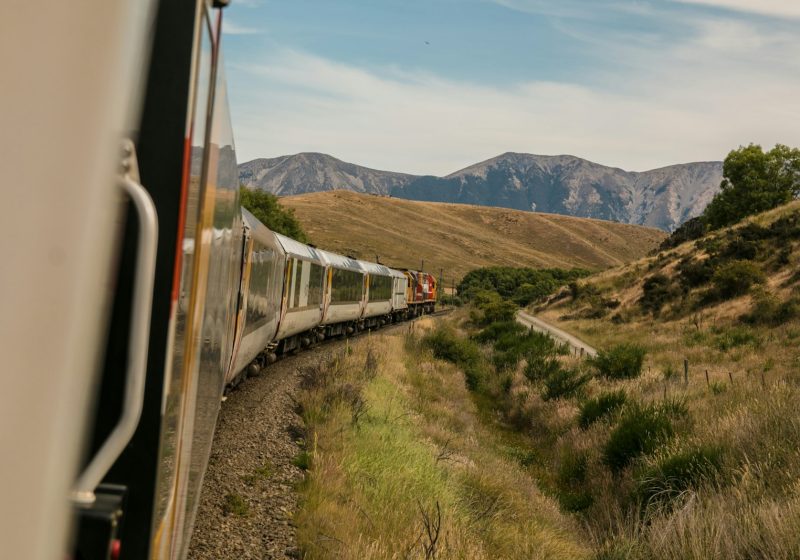
Two sleeper trains across a longer trip. You go to sleep in one city and wake up in another. You skip two hotel nights and two travel days. The cost is comparable to economy flights plus hotels. The story is dramatically better.
The compound effect over multiple trips
Most flight choices are made for one variable: speed. Most train choices are made for several: speed, comfort, cost, scenery, productivity. The richer decision tends to produce richer trips. When you can choose by more than one variable, the trip can take a more interesting shape.
The carbon math of transport is the clearest in all of sustainable travel. Flights of any length emit roughly an order of magnitude more per passenger-kilometer than trains; very short flights emit even more relative to their distance. This isn’t a marketing claim; it’s physics, repeatedly measured. The decisions you make in transport book directly into measurable global impact.
A small line for your notes app
Try one rail trip on the route you would normally fly. Compare them honestly, including airport time, transfers, security, and the wasted time at the gate. Most travelers come away from the comparison surprised at how favorable rail looks, and they continue choosing it on subsequent trips.
A parting note for the road
Travel changes when the small practices become invisible. The reusable bottle isn’t a virtue; it’s a default. The local restaurant isn’t a choice; it’s where you eat. The longer stay isn’t a sacrifice; it’s the reason the trip felt different. That’s the destination of sustainable travel, not a single ethical posture but a quieter, deeper way of moving through the world.
Want to keep reading? Try Solo Sustainable Travel for Beginners: Where to Begin next, it’s one of the most-read pieces we’ve published on this theme.
Frequently asked questions
How many kilometers a day is reasonable?
8-12 km for a typical city day. 15-20 km for a focused walking-tourism day. 25+ km is real hiking territory and requires conditioning.
What about cities with bad weather?
Decent rain gear handles all but the worst weather. A small umbrella, a waterproof jacket, and reasonable shoes turn most rainy days into walkable ones.
Is walking always slower than taking transit?
For distances under 2 km, walking usually beats transit door to door once you factor in waiting and walking to the station. Above 3 km, transit wins on time.
What about safety walking at night?
Most major city centers are safe at night. Avoiding poorly-lit shortcuts and walking with company in unfamiliar areas is sensible. Ask your accommodation for honest advice.
Is walking realistic with mobility limitations?
Many cities are accessible, but the experience varies. Cities with strong public transit are generally easier than cities that rely on walking. Plan with the specific destination's accessibility in mind.