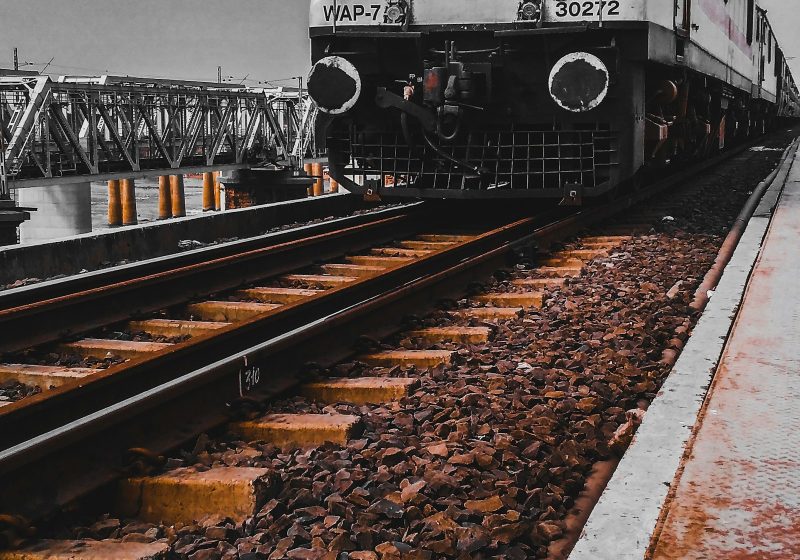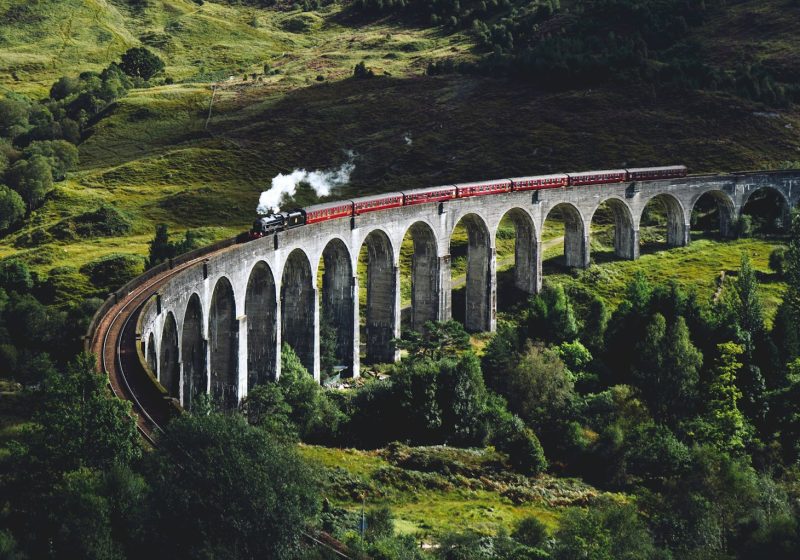
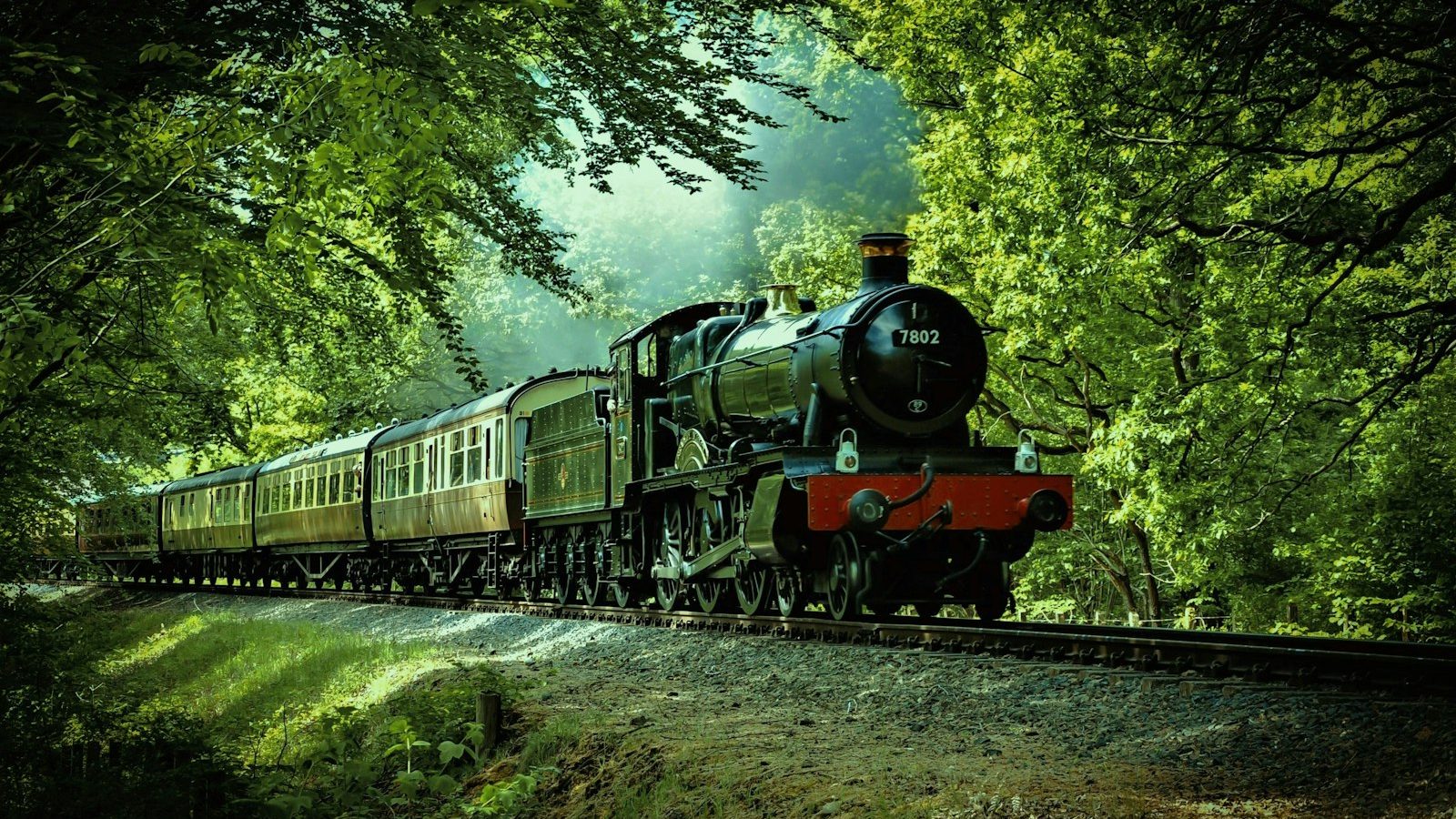
There is a stretch of track in northern Italy where the train passes between snow-covered mountains for almost two hours, and the entire carriage falls silent. People stop scrolling. They lean toward the window. Children climb into their parents’ laps. No flight ever produces that. Trains, for travelers willing to give them a few extra hours, return something flights have quietly taken away.
The carbon math is dramatic
A typical mid-range European train trip emits around 14 grams of CO₂ per passenger-kilometer. A short-haul flight on the same route emits between 150 and 250 grams. The difference is not subtle. For trips under 1,000 kilometers, the train is almost always the substantially lower-emission choice, often by a factor of ten or more.
You arrive in the city center
Airports are typically 15-60 minutes outside the cities they serve, requiring taxis, trains, or buses to reach the actual destination. Trains arrive at central stations, usually within walking distance of where you actually want to be. The hidden transit time and cost of flying often eats most of the speed advantage.
For more on this, see our companion piece on How to Travel With Zero Cars on Vacation: A Realistic Guide.
Productive time, not lost time
Train travel is genuinely usable time. Tables, plug sockets, mostly reliable wi-fi, and the ability to walk around make trains better workspaces than airports or planes. Many remote workers explicitly choose trains for this reason. A six-hour train can be six productive hours; a two-hour flight is two and a half hours of mostly wasted time when you count check-in, security, and transfer.
Sleeper trains have returned
Europe has seen a sleeper train renaissance. Nightjet routes connect most major European capitals. Routes like Paris to Vienna, Brussels to Berlin, and Stockholm to Hamburg now run reliable overnight services. You go to bed in one country and wake up in another, with no flight emissions, no hotel night to pay for, and a story worth telling.
When trains clearly beat flights
- Any journey under 1,000 km in Europe
- Most journeys under 700 km in North America (where rail exists)
- Any trip where you’d arrive late in the evening anyway
- Trips where you have laptop work to do
- Trips with kids, who often prefer train comfort
- Trips through scenic regions
- Trips between cities with poorly-connected airports
If you want to go deeper on a related angle, our piece Electric Scooters and E-Bikes for City Travel: When They Make Sense picks up where this one leaves off.
Train routes are often more scenic
The most beautiful rail lines in the world, the Bernina Express through the Alps, the Coastal Pacific in New Zealand, the Glacier Express in Switzerland, the Trans-Siberian in Russia, are journeys in their own right. Even ordinary intercity routes pass through scenery that planes fly invisibly over.
How this looks on real trips
Three quick scenarios where these principles land on the ground. They are lightly fictionalised composites of trips we have done, so we can talk about specifics without exposing anyone.
The bike-supplement trip
A week in a cycle-friendly European city using a rental bike as the primary local transport. The metro fills gaps; walking covers short distances. Daily emissions essentially zero. The city reveals itself differently at bike pace.
The EV road trip done right
A two-week loop through a region with mature charging infrastructure. EV rental from a major operator. Charging stops align naturally with meal breaks. Total emissions roughly 70% lower than an equivalent gasoline trip. The pace turns out to suit the trip better than the rushed version would have.
The sleeper train chain
Two sleeper trains across a longer trip. You go to sleep in one city and wake up in another. You skip two hotel nights and two travel days. The cost is comparable to economy flights plus hotels. The story is dramatically better.
What this looks like over a year of travel
Most flight choices are made for one variable: speed. Most train choices are made for several: speed, comfort, cost, scenery, productivity. The richer decision tends to produce richer trips. When you can choose by more than one variable, the trip can take a more interesting shape.
The carbon math of transport is the clearest in all of sustainable travel. Flights of any length emit roughly an order of magnitude more per passenger-kilometer than trains; very short flights emit even more relative to their distance. This isn’t a marketing claim; it’s physics, repeatedly measured. The decisions you make in transport book directly into measurable global impact.
One line to carry forward
Try one rail trip on the route you would normally fly. Compare them honestly, including airport time, transfers, security, and the wasted time at the gate. Most travelers come away from the comparison surprised at how favorable rail looks, and they continue choosing it on subsequent trips.
A last note before you plan
The honest version of sustainable travel isn’t about achieving some pristine version of perfection. It’s about doing what works, repeatedly, and watching how the small choices compound across years of trips. Start with the easiest habit. Then add the next. And the next. Eventually you’ll travel without thinking about most of this, and the trips will be better for it.
Want to keep reading? Try Low-Waste Travel With Kids and Family: A Reality Check next, it’s one of the most-read pieces we’ve published on this theme.
Frequently asked questions
Are trains always more expensive than budget flights?
Not when booked in advance. Trains booked 8-10 weeks ahead are often cheaper than equivalent flights, especially when accounting for airport transit time and baggage fees.
How do I book European train trips?
Trainline and Omio aggregate most European rail. National operators (SNCF in France, DB in Germany) often have better prices direct. Interrail and Eurail passes are excellent for multi-trip itineraries.
What about long-distance trains in North America?
Amtrak's northeast corridor is excellent. Long-distance routes (Empire Builder, California Zephyr) are spectacular for scenery but slow. Canada's Via Rail is similar.
Are sleeper trains comfortable?
Modern Nightjet cabins are perfectly comfortable, with private compartments, real bedding, and breakfast in the morning. Cheaper couchette cars are basic but functional.
What if I get motion sickness on trains?
Most travelers don't. Trains are generally smoother than buses or boats. Sitting in the direction of travel and choosing a seat near the middle of the carriage helps.