
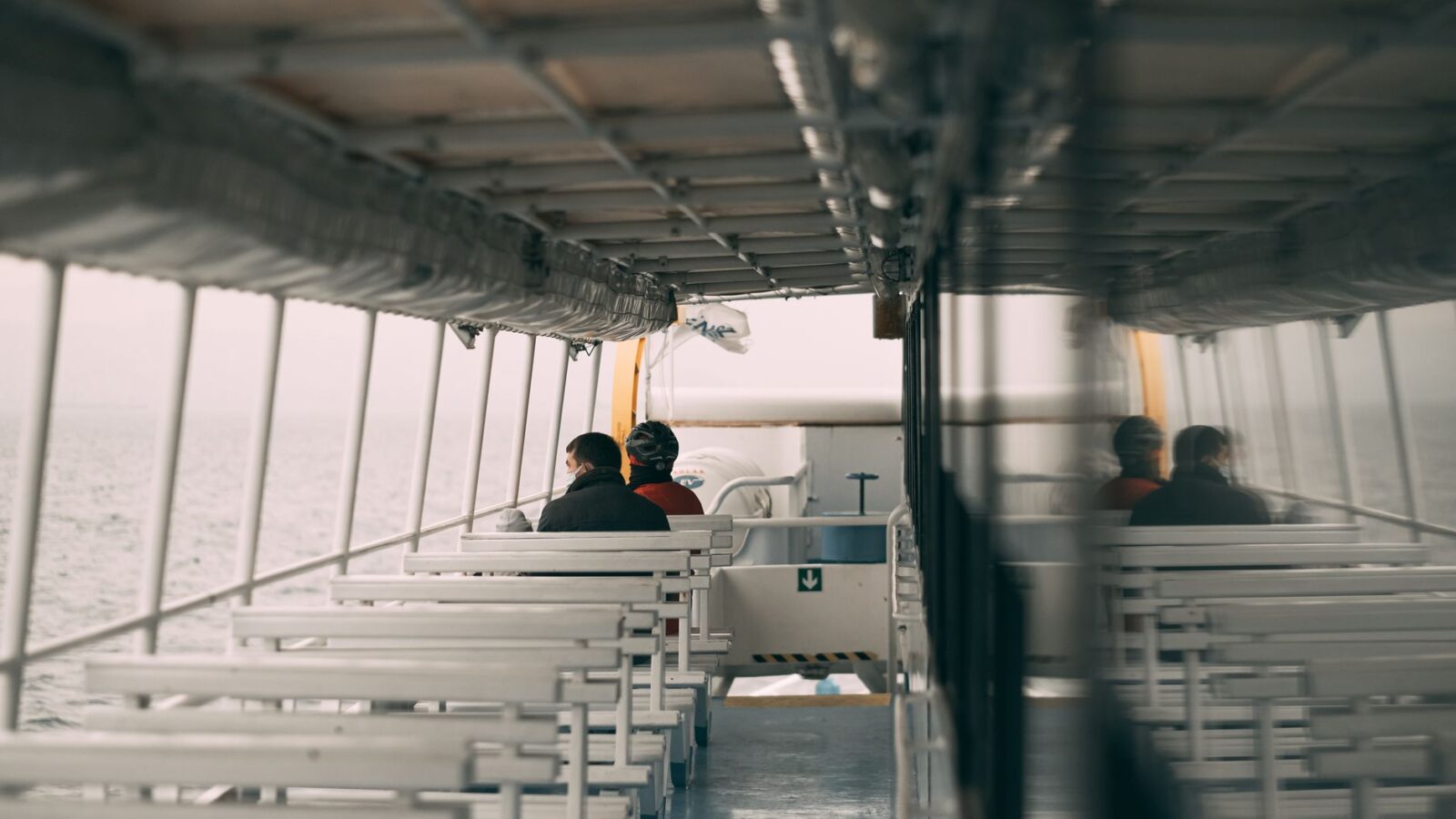
A Stena Line ferry from Kiel to Gothenburg burns roughly 55 grams of CO2 per passenger-kilometer when it sails at capacity on heavy fuel oil, which sounds grim until you compare it with the 246 grams a short-haul flight puts on the same seat. Ferries sit in a strange middle ground: sometimes they are the cleanest option on the map, sometimes they are the dirtiest thing between two coastlines. We wrote this piece because ferry travel sustainability is often sold in broad strokes, and the actual numbers reward travelers who read the fine print.
Editors on our team have spent years zig-zagging the Baltic, the Adriatic, and the Philippine archipelago on ships that ranged from LNG-powered giants to smoky wooden bangkas. What follows is what we would tell a friend before they booked.
Where ferries beat planes on carbon, and where they don’t
The honest rule of thumb: a modern, well-loaded ferry usually beats a short flight when the sea route is under about 400 kilometers and the ship is either LNG, hybrid, or battery-electric. A high-speed catamaran running on diesel, packed at 40 percent occupancy, can be worse than the flight it replaces. The Our World in Data transport comparison puts standard ferry emissions at around 19 grams of CO2 per passenger-kilometer for foot passengers on conventional routes, and about 129 grams if you bring a car.
Three variables drive the actual number:
- Fuel type: heavy fuel oil is the dirtiest, marine gas oil is cleaner, LNG cuts CO2 by roughly 20 percent, and battery-hybrid systems on short routes can hit near zero on the electric segment.
- Speed: fuel burn scales with the cube of speed. A 22-knot cruise ferry uses roughly half the fuel per hour of a 32-knot fastcraft.
- Load factor: an empty ship still burns fuel. Off-season sailings can double per-passenger emissions.
Baltic routes that are genuinely greener
The Baltic is where regulation and competition pushed operators fastest. Since the Sulphur Emission Control Area rules tightened in 2015, most ships here run on low-sulfur fuel, and several have gone further. Viking Line’s Viking Glory, on the Turku to Stockholm crossing, uses LNG plus a rotor sail and reports about 10 percent lower fuel use than its predecessor. Stena Line’s Stena Jutlandica runs part of its Gothenburg to Frederikshavn hop on battery power. Tallink’s MyStar, between Tallinn and Helsinki, also runs LNG dual-fuel.
For a traveler comparing Stockholm to Helsinki, the overnight ferry at around 55 grams per passenger-kilometer beats the 90-minute flight at roughly 175 grams, and you skip both airport transfers. If you are stitching Nordic capitals together, our guide to the best European train routes pairs well with these crossings.
The Mediterranean is more mixed
Mediterranean ferries carry huge volumes: over 400 million passenger movements a year according to European Commission figures. The problem is that many of the marquee routes still use older tonnage. The Barcelona to Civitavecchia crossing, for example, is a 20-hour haul on ships that predate the current emission tier, and the per-passenger footprint can rival a direct flight if you travel alone in a cabin.
The greener picks tend to be shorter and newer:
- Bari to Durrës on GNV or Adria Ferries, a 9-hour overnight that replaces a flight plus two transfers.
- Piombino to Portoferraio (Elba), a 1-hour Moby Lines crossing, which starts trialing hybrid vessels in 2026.
- Athens to the Cyclades on Blue Star Ferries conventional boats rather than the high-speed SeaJets fastcraft, which burn roughly 2.5 times more fuel per seat.
If you are already thinking about pace over distance, our piece on slow travel and going fewer places makes the case that a slower ferry often replaces two flights, not one.
Asian island hopping: the honest picture
Southeast Asian ferry networks are the hardest to generalize. Indonesia’s Pelni fleet moves millions of passengers between islands on ships that are efficient per head (2,000-plus passengers per sailing) but run on heavy fuel oil. The Philippines’ 2GO Travel operates similar economics: a Manila to Coron trip is around 900 kilometers over 15 hours, and per-passenger emissions land near a domestic flight, but you avoid the airport carbon and often arrive in a smaller port town.
The genuinely low-carbon option in the region is short-hop wooden outrigger boats (bangkas, jukungs) with small diesel or increasingly electric outboards. They are not audited, but a 40-passenger boat on a 30-minute crossing using a 40-horsepower engine emits a fraction of any alternative. Pair these with the practical habits in using public transportation like a local.
How to actually pick a greener ferry
- Check the fuel: operator websites often list LNG, hybrid, or battery. If they only advertise “modern fleet”, assume marine gas oil.
- Prefer conventional over fast: a 6-hour ferry beats the 3-hour fastcraft on carbon almost every time.
- Travel foot passenger: bringing a car roughly quadruples your allocated emissions.
- Pick shoulder-season sailings on busy routes, off-season on niche routes: load factor matters.
- Book deck or seat, not cabin, on short crossings under 8 hours: cabin heating and lighting are non-trivial.
- Chain with rail, not car rentals, at both ends. Our notes on train travel cover the connecting logistics.
The numbers, side by side
| Route | Distance | Ferry CO2 (g/pkm) | Flight CO2 (g/pkm) | Time saved by flying |
|---|---|---|---|---|
| Helsinki to Tallinn | 80 km | 45 | 180 | Roughly zero, door to door |
| Stockholm to Turku | 270 km | 52 (LNG) | 195 | 2 hours |
| Barcelona to Palma | 210 km | 110 (conventional) | 170 | 4 hours |
| Piraeus to Santorini | 230 km | 65 (slow), 165 (fast) | 190 | 3-5 hours |
| Manila to Coron | 900 km | 140 (2GO) | 135 | 13 hours |
Figures compiled from operator sustainability reports and cross-checked against the European Commission’s shipping emissions data. Real trips will vary by weather, load, and route.
Quick checklist
- Under 400 km and the ferry is LNG or hybrid: book it.
- Fastcraft over 25 knots: check emissions before choosing over the slow boat.
- Foot passenger cuts your allocated carbon by 60-75 percent versus bringing a car.
- Overnight cabin ferries only pay off carbon-wise when they replace both a flight and a hotel night.
- Southeast Asian short hops on small local boats often beat any regional flight.
What to pack for a long crossing
Ferries lack the strict cabin limits of airlines, which changes what makes sense. A refillable bottle (onboard water is potable on most EU-flagged ships), a shell layer for windy decks, and something to block cabin light matter more than compression cubes. Our reusable travel gear essentials list covers the pieces that actually earn their weight on multi-day boat trips.
Ferry travel is not automatically green, and no operator’s marketing should be trusted at face value. But on the right route, with the right ship, at a reasonable speed, a ferry can cut your journey’s carbon by half or more while giving you back something planes never do: a horizon that moves at the pace of the water.
Frequently asked questions
Is an overnight ferry with a cabin better or worse than a day sailing?
It depends on what the ferry replaces. If the overnight sailing lets you skip both a flight and a hotel night, it usually wins on total carbon by 20-40 percent. If you would have taken a train and a hostel anyway, a day deck ticket beats an overnight cabin because cabin heating, lighting, and hot water add roughly 3-5 kWh per person per night.
How do high-speed catamarans compare to conventional ferries on the same route?
Fastcraft running 30-35 knots burn roughly 2 to 2.5 times more fuel per seat than a conventional 20-knot ferry over the same distance. On Greek island routes, a SeaJets fastcraft can emit around 165 g CO2 per passenger-kilometer while a Blue Star slow ferry sits closer to 65 g. Take the slow boat unless the schedule genuinely forces the fast one.
Are LNG-powered ferries actually cleaner, given methane slip concerns?
LNG cuts CO2 by roughly 20 percent and sulfur emissions by over 90 percent versus heavy fuel oil, but unburned methane slip can offset 10-30 percent of that CO2 gain depending on engine type. Modern high-pressure dual-fuel engines like those on Viking Glory have low slip; older low-pressure engines are worse. LNG is still a net improvement on most crossings but not a full solution.
Does bringing a bicycle on a ferry change the emissions math?
Barely. Most ferries charge 5-15 euros for a bicycle and allocate near-zero additional weight-based emissions to it, unlike cars which add roughly 1,500 kg. A foot passenger with a bike keeps allocated emissions close to the deck-passenger baseline, and you skip needing a rental at the other end. Pair it with the notes in our cycling as transport guide for connecting routes.