Most travelers can’t simply stop flying. Family is somewhere. Work involves international travel. Continents exist. The realistic question is not whether to fly but how to fly thoughtfully, and how to balance occasional flying with substantially lower-impact travel the rest of the time.
Take fewer, longer trips
The single highest-impact change is reducing the number of flights. One two-week trip generates much less impact than two one-week trips to different destinations. Fewer trips also tend to be deeper, more memorable trips. The framework is simple: fewer flights, longer stays.
Choose lower-impact destinations for some trips
Mixing in train-accessible destinations between flights reduces overall yearly emissions significantly. A European traveler who flies once a year and takes the train for two additional weekend trips emits less than one who flies for all three.
For more on this, see our companion piece on Slow Travel: The Case for Going Fewer Places.
Fly economy direct
We covered this elsewhere, direct economy roughly halves emissions per passenger compared to connecting or premium-cabin alternatives. It’s also cheaper. The economic and environmental incentives align.
Off-season travel
Flying in off-season helps in two ways: planes are less full (which is bad for per-passenger emissions if airlines fly the route anyway), but more importantly, off-season travel spreads tourism pressure away from the seasonal peaks that strain destinations’ resources.
A realistic flight-reduction strategy
- Set a personal annual flight budget (e.g., 2 round-trips)
- Plan one major flight per year, then nothing else international
- Take the train for any trip within 1,000 km
- Choose economy direct over premium connecting
- Combine business and personal travel when possible
- Stay longer in fewer destinations
- Skip the bucket-list destination that requires a long flight this year
- Travel off-season
- Pay for verified offsets for unavoidable flights
If you want to go deeper on a related angle, our piece Walking: The Most Sustainable Way to Travel Anywhere picks up where this one leaves off.
Combine trips where possible
If you’re flying somewhere, can the trip combine multiple purposes? A work trip extended by a personal long weekend adds little emissions but doubles the value of a single flight. A visit to family combined with a week of vacation in the same region is more efficient than two separate trips.
What this looks like in the field
Three worked examples from recent editorial trips. These are composites built from actual editorial trips, arranged so the pattern is clear.
The bike-supplement trip
A week in a cycle-friendly European city using a rental bike as the primary local transport. The metro fills gaps; walking covers short distances. Daily emissions essentially zero. The city reveals itself differently at bike pace.
The rail-only European week
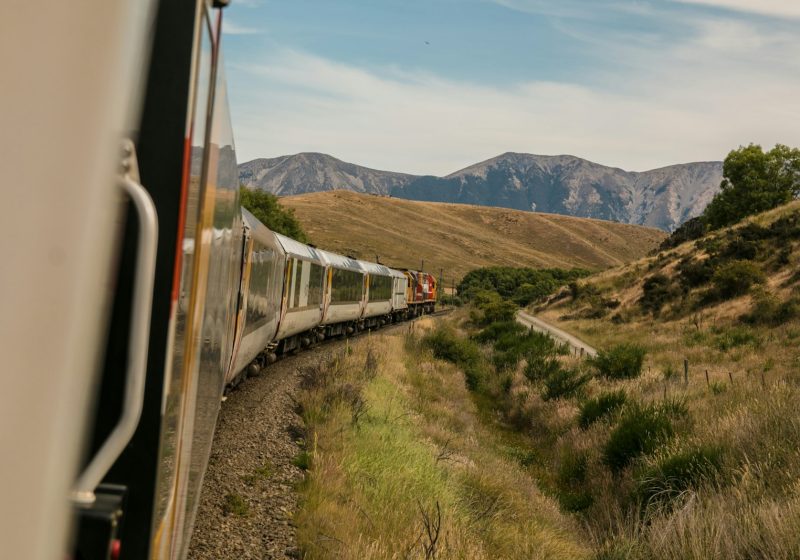
A trip beginning and ending by Eurostar, with intercity rail between three small bases. No flights, no rentals, no taxis. Total emissions roughly 90% lower than the equivalent flight-and-rental version. Total cost slightly lower. Total experience much richer.
The EV road trip done right
A two-week loop through a region with mature charging infrastructure. EV rental from a major operator. Charging stops align naturally with meal breaks. Total emissions roughly 70% lower than an equivalent gasoline trip. The pace turns out to suit the trip better than the rushed version would have.
What you notice after a few trips of doing this
Slow transport is often where the most interesting conversations happen. The seatmate on a six-hour train. The bus driver who has the patience to chat. The person at the café during a long layover. These low-pressure encounters are where travel’s randomness shows up best, and where you collect the stories you tell years later.
The economics of sustainable transport almost always favor the traveler. Trains booked in advance are usually cheaper than equivalent flights once you include airport transfers, baggage fees, and food. The cost savings often exceed the time cost of choosing rail. The total trip experience is almost always better.
The idea that outlives the packing list
Try one rail trip on the route you would normally fly. Compare them honestly, including airport time, transfers, security, and the wasted time at the gate. Most travelers come away from the comparison surprised at how favorable rail looks, and they continue choosing it on subsequent trips.
The last line of advice
None of this is meant to be a checklist that paralyzes the next trip you plan. It’s a set of tools you can pick from. Bring two of them. Bring five. Bring whatever feels right for the trip in front of you. Sustainable travel that gets done beats perfect sustainable travel that stays in the planning phase.
Want to keep reading? Try How to Pack Zero-Waste for a Week-Long Trip next, it’s one of the most-read pieces we’ve published on this theme.
Frequently asked questions
Is "flight shame" useful?
Mixed. Some people respond by changing behaviour; others feel paralyzed. The constructive version is "flight awareness", being conscious of choices without moralizing.
What about business class for sleep on long flights?
Business class triples your personal emissions. The sleep benefit is real but the carbon cost is substantial. Premium economy is a reasonable middle ground.
Should I never fly anywhere?
Most people can't live that way without losing meaningful family or work connections. The framework is fewer, more considered flights, not zero flights.
Are alternative fuels going to fix this?
Sustainable aviation fuel (SAF) is the most credible long-term path. Adoption is slow. In the meantime, behavioural changes (fewer/longer trips, lower cabin class) deliver immediate impact.
What about charter flights or private jets?
Private jets are 5-14 times more emissions-intensive per passenger than commercial flights. They're the highest-impact form of personal transport humans have invented.