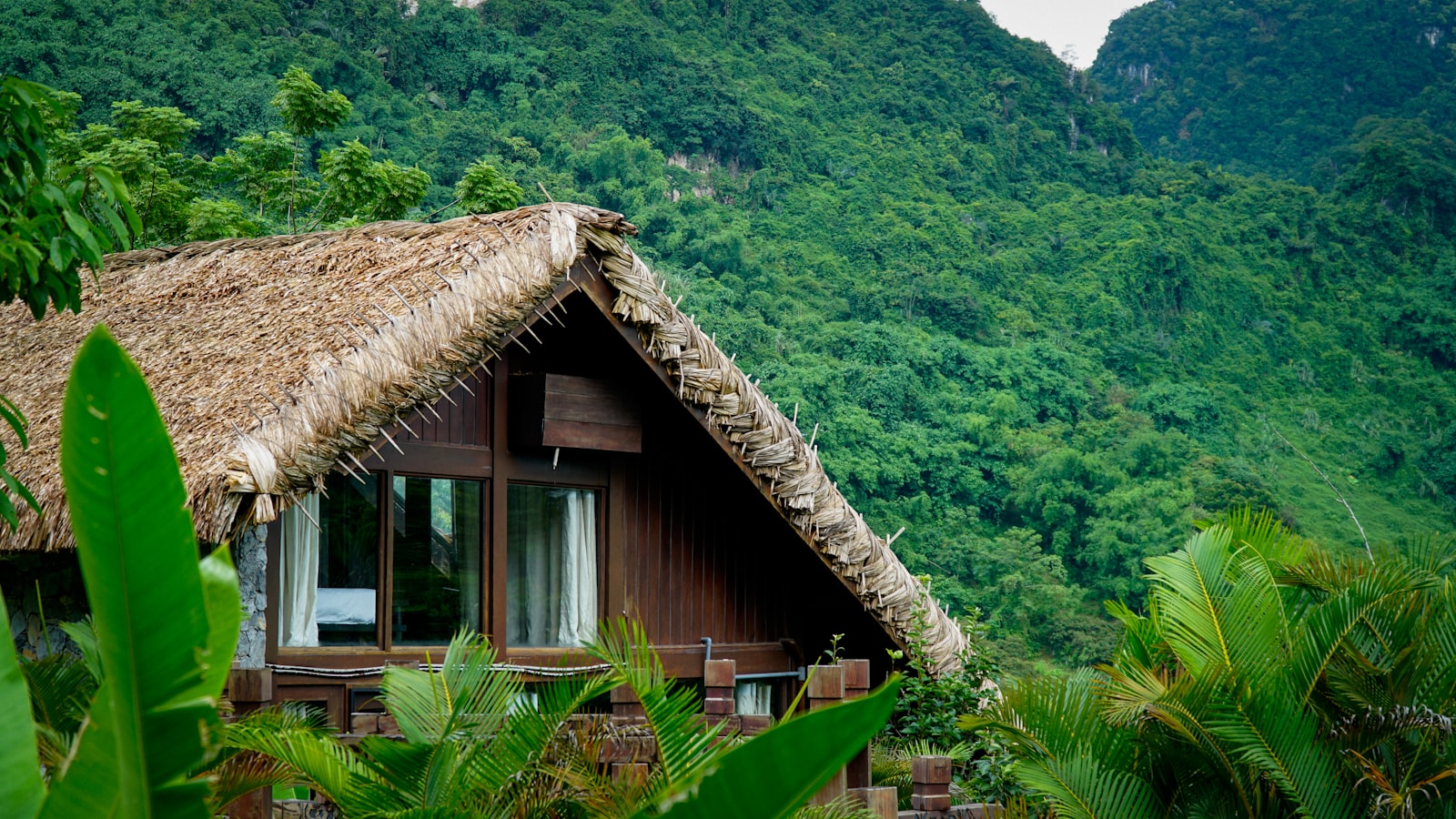
Some of the most rewarding accommodations don’t look like hotels at all. A yurt heated by a wood stove in the Mongolian steppes. A treehouse forty feet up in a Brazilian cloud forest. A converted shepherd’s hut in the Welsh hills. These alternative stays often have lower impact than conventional rooms, and a far better story to tell.
Why alternative accommodations tend to be lower impact
The unifying feature of treehouses, yurts, glamping tents, shepherd huts, and converted shipping containers is small footprint and minimal infrastructure. Less land disturbed during construction, less material used, less to heat and cool. Most rely on careful design rather than mechanical systems.
Treehouses: more than novelty
Well-designed eco-treehouses cause minimal impact on the trees they’re built around, they use cable suspension systems rather than nailed mounts, and they distribute weight across multiple anchor points. Reputable operators work with arborists to ensure tree health. Visiting them supports the design tradition.
For more on this, see our companion piece on Eco-Friendly Airbnbs and Short-Term Rentals: How to Choose Well.
Yurts and traditional shelters
Yurts are a thousands-year-old design with minimal materials and excellent thermal properties. Properties in Mongolia, Kyrgyzstan, the western US, and Scandinavia offer authentic or adapted versions. The structure naturally enforces low-impact living, small space, simple amenities, focus on the view outside.
Glamping: spectrum
The term covers a huge range, from genuinely low-impact safari tents on durable bases to luxury developments with full plumbing, AC, and concrete foundations. The lower-impact end is impressive. The higher-impact end is essentially a small hotel pretending to be a tent. Read the specifics carefully.
Alternative eco-stays worth considering
- Eco-treehouses in Brazil, Costa Rica, the Pacific Northwest
- Authentic gers and yurts in Mongolia and Kyrgyzstan
- Safari tents in Tanzania, Kenya, Botswana
- Shepherd huts in Wales, Scotland, the Cotswolds
- Earthships and earth-sheltered homes in New Mexico, Spain
- Houseboats on waterways in the Netherlands and the UK
- Restored historic stone huts in the Italian and Spanish countryside
If you want to go deeper on a related angle, our piece Reusing Towels and Other Tiny Eco-Hotel Habits That Actually Add Up picks up where this one leaves off.
Earth-sheltered and underground stays
Earth-sheltered accommodations, built partially or fully underground, have outstanding thermal performance and minimal visual impact. Properties in southern Spain, the American Southwest, and parts of Iceland offer the format. The sleeping experience is surprisingly comfortable thanks to constant cool temperatures.
What this looks like for a weekend away
Three ways the idea actually shows up on a real trip. Composites, not fiction: the specifics come from trips we have taken this year.
The eco-lodge anchor trip
A week at a certified eco-lodge as the centerpiece of a longer trip. Per-night cost is higher but funds genuine conservation work. The trip is structured around the lodge and a few smaller stays nearby. Total impact is lower than scattering across many short stays.
The city eco-hotel for a short stay
A two-night urban stay at a Green Key certified property close to public transit. Bulk dispensers in the bathroom. Locally-sourced breakfast. A sustainability page that lists named suppliers. The mid-range cost is comparable to a standard chain hotel; the difference is the operations behind it.
The cooperative homestay
A few nights at a community-run homestay through a verified network. Meals shared with the family. Days spent helping in their garden or learning a craft. The economic benefit goes directly to the community. The cultural exchange is the trip itself.
The knock-on effects on how you plan next time
The most rewarding accommodations are often the ones where the line between guest and household blurs slightly. A small kitchen you can use. A garden you can sit in. A book left on the side table you can read. These are not amenities; they are the texture of being briefly part of a place. A standard hotel can never offer this; an attentive small property does it without trying.
There’s a structural argument here too. The accommodation industry concentrates a lot of wealth, globally, a handful of large operators run most of the rooms billed each night. Booking smaller properties helps redistribute that wealth, often to people who genuinely depend on it for their living. The map of small accommodations is the map of small economic resilience.
The heart of it, in one line
The first hour of any new accommodation tells you most of what you need to know. Walk in slowly. Notice the textures. Listen to how the staff greet you. Notice whether the lobby feels lived in or arranged. The signals are reliable and they shape every choice you’ll make for the rest of the stay.
One more note for the trip ahead
If this article persuaded you to try one thing on your next trip, that’s the right outcome. Don’t try everything. Don’t aim for perfection. Try one thing. See how it feels. Add the next when the first is automatic. The practice builds itself across years, and looking back, the difference is dramatic.
Want to keep reading? Try Low-Waste Travel With Kids and Family: A Reality Check next, it’s one of the most-read pieces we’ve published on this theme.
Frequently asked questions
Are alternative stays expensive?
They vary enormously. Authentic shepherd huts and basic yurts can be cheap. Luxury treehouses and high-end glamping can be expensive. The format doesn't determine the price.
Are they suitable in winter?
Many yurts and shepherd huts are wonderfully suitable in winter with wood stoves. Treehouses tend to be summer-only. Glamping varies. Always confirm the property's heating arrangements.
How do I find well-run alternative stays?
Glamping Hub, Canopy & Stars, and i-escape are reputable aggregators. National park lodge directories also list excellent options.
Are they accessible for older travelers?
Most ground-level options are. Treehouses obviously aren't. Many operators have accessible alternatives, confirm before booking.
What about insects and weather concerns?
Good operators address both with bed nets, screened openings, and weather-tested designs. Cheap operators may not. Read recent reviews for the lived experience.