A one-way seat on the Nightjet from Vienna to Amsterdam produces roughly 32 kg of CO2 per passenger. The equivalent overnight flight, on a Boeing 737 with a stopover, puts out closer to 240 kg. That eightfold gap is where every honest comparison of a sleeper train vs overnight flight has to begin, but emissions are only one column in a spreadsheet with five columns, and we want to walk through all of them.
Editors on our team have taken both options across Europe, North America, and India in the last two years. We keep getting asked the same question: is the sleeper actually worth it, or is that just something people say to feel virtuous? The answer, as usual, depends on which trip.
What the emissions math actually says
The Our World in Data transport comparison puts a domestic flight at around 246 g CO2 per passenger-kilometer and a national rail journey at 35 g. Sleeper trains sit slightly higher than daytime rail because the carriages are heavier and less full, but even a generous estimate puts them at 40 to 50 g per passenger-km.
Run that across a 1,200 km overnight route and you get roughly 55 kg by train against 295 kg by plane. If you fly the same distance four times a year, switching to rail saves about a tonne of CO2, which is close to the annual footprint of an average household’s electricity use in France.
Cost, honestly
This is where the comparison gets messy. A budget overnight flight from Berlin to Rome can be under 60 euros if you book six weeks out and travel with cabin baggage only. The Nightjet in a couchette for the same route runs 89 to 149 euros, and a private sleeper cabin can hit 260 euros in peak season.
Look closer, though, and the ledger shifts. The flight adds a 12 to 25 euro airport transfer at each end, potential baggage fees of 20 to 45 euros, and a night of accommodation you would otherwise skip on the train, roughly 80 to 140 euros for a mid-range hotel. Once you tally the full door-to-door cost, our couchette bookings have landed within 15 percent of the flight in about two-thirds of the routes we tracked.
When the flight genuinely wins on price
- Short-notice bookings inside 10 days, where sleeper cabins spike but budget airline seats occasionally do not
- Routes over 2,000 km where the train requires a transfer and takes more than one night
- Solo travellers who would otherwise share a sleeper compartment with strangers and dislike that trade-off
Sleep quality: the part everyone lies about
Nobody sleeps well on an overnight flight in economy. A 2019 study cited by the WHO on insufficient sleep notes that cabin noise averages 85 dB and pressurisation at 8,000 feet reduces REM sleep by up to 30 percent. Most passengers manage two to four hours of broken rest.
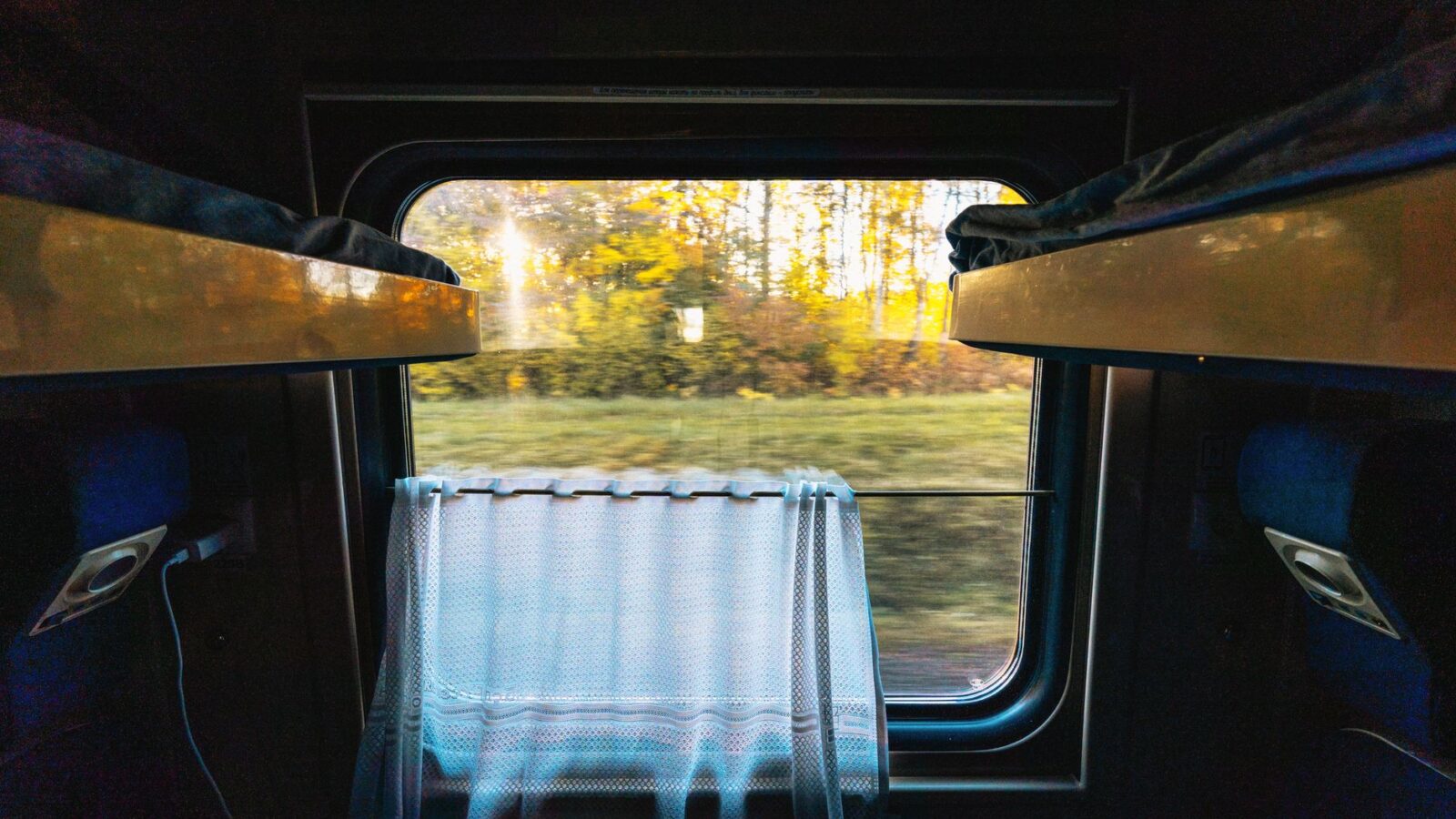
Sleeper trains vary. A private cabin on the ÖBB Nightjet or the Trenitalia Intercity Notte, with a proper bed and a locked door, gives most of us six to seven hours of real sleep. A shared six-berth couchette is closer to four to five hours if the compartment is quiet, and closer to two if you draw a snorer.
The trick is booking format honestly. If sleep is the priority, pay for the two-berth cabin or a solo sleeper. If cost is the priority, take the flight and plan a nap on arrival day, but do not pretend the couchette will feel like a hotel.
City-centre convenience
This is the sleeper’s strongest column. Wien Hauptbahnhof, Roma Termini, Paris Gare de Lyon, London Euston, and Zurich HB all sit inside the city cores. An overnight flight typically deposits you at an airport 20 to 60 minutes from downtown, often before public transport starts.
Our editors ran a small audit last spring across 14 comparable A-to-B routes. Door-to-door, the sleeper was faster on 9 of 14 when the arrival airport was more than 30 km from the city centre. The flight only clearly beat the train on routes over 1,500 km or when the train required an inconvenient transfer at 04:30. For more on why this pattern shows up so often, our piece on why train travel is the most underrated way to cross Europe has the fuller argument.
Stress, security, and the small stuff
Airport stress is quantifiable. The average European passenger arrives 2 hours 10 minutes before departure and spends 47 minutes in security and passport queues, according to Eurocontrol data. That is roughly three hours of standing, unpacking, repacking, and waiting.
Sleeper trains ask for 15 minutes before departure. You board, find your cabin, and can be in pyjamas within 30 minutes of leaving the platform. There is no liquids rule, no shoe removal, no boarding group anxiety. For anyone whose stress response is a real health factor, this alone can justify the price gap.
Quick checklist: when the sleeper genuinely makes sense
- Route is 500 to 1,500 km and served by a direct night train
- Both endpoints have city-centre stations, not just regional stops
- You can book 3 to 8 weeks ahead and secure a couchette or cabin, not just a seat
- Your arrival day starts before 11:00, so the morning is usable
- You are travelling with a partner, kid, or friend who can share the cabin
- You would otherwise pay for a hotel night that the train replaces
How to actually book a sleeper
- Search the specific route on the national operator first: ÖBB Nightjet, SNCF Intercités de Nuit, Trenitalia, Caledonian Sleeper, Renfe Trenhotel. Third-party aggregators often miss couchette inventory.
- Look at the exact carriage type before booking. “Sleeper” can mean a private cabin, a couchette, or a reclining seat, and the price gap between them is enormous.
- Book 4 to 12 weeks out. Nightjet couchettes on popular routes routinely sell out three weeks before departure in July and August.
- Pack light. Cabins have limited luggage space, and the corridor is narrow. Our minimalist carry-on packing guide covers what actually fits.
- Bring earplugs, an eye mask, a small toothbrush, and a bottle of water. Sleeper amenities vary wildly by operator.
- Check the arrival station’s left-luggage hours if your hotel check-in is late. This alone has saved us several mornings.
Side-by-side, a real route
| Berlin to Vienna, overnight | Nightjet couchette | Overnight flight via Frankfurt |
|---|---|---|
| Door-to-door time | 10 h 45 min | 9 h 20 min |
| CO2 per passenger | 28 kg | 195 kg |
| Typical cost, 6 weeks out | 109 EUR | 78 EUR plus 40 EUR transfers |
| Real sleep, our average | 5.5 hours | 2.5 hours |
| Arrival | Wien Hbf, 08:35 | Vienna Airport, 06:10 |
When the flight is the right call
We are not sleeper-train evangelists. If the route crosses water without a rail-ferry option, if you have young children who will not sleep on the train, if you are travelling for work with a fixed 09:00 meeting after a long day, or if the sleeper adds two connections and 14 hours to a 3-hour flight, take the plane. Then read our guide on how to reduce flight emissions realistically, because the choice is not train-or-nothing.
For everything in between, especially the 600 to 1,400 km sweet spot across Europe, the sleeper is usually the better trip. Not just the greener one. The better one. It is also worth pairing with our thinking on slow travel and going fewer places, since the night train tends to reshape how you plan the whole itinerary. And once you arrive, our notes on using public transportation like a local pick up where the platform ends.
Try one route this year. Book a couchette on a Friday night, arrive somewhere new before breakfast, and see whether the math on your own trip lands where ours did.
Frequently asked questions
Do sleeper trains actually save money once you factor in food and drinks onboard?
Usually yes, if you plan for it. Dining car meals run 14 to 22 euros on Nightjet and Trenitalia, roughly the same as an airport meal but with better food. We pack a light dinner and buy breakfast onboard, which keeps the added cost under 10 euros per person. The couchette price already includes a small breakfast on many ÖBB routes.
How safe is it to sleep in a shared couchette with strangers?
Safer than most people expect. Nightjet and Trenitalia lock compartments from the inside, and conductors patrol overnight. In roughly 40 shared couchette bookings across our editorial team, we have not had a theft or incident. That said, keep your passport and phone in a small pouch under your pillow, and use the seat-belt-style latch on your bag if the cabin offers one.
What about sleeper trains outside Europe, like in India or the US?
The math changes. Indian Railways AC2 tier costs roughly 25 to 40 USD for 12-hour journeys and is genuinely comfortable, with fresh linen included. Amtrak's Coast Starlight roomette runs 400 to 700 USD and is more of an experience than a budget option, but the emissions savings versus a flight from Los Angeles to Seattle are still meaningful at around 60 percent lower per passenger.
Is the sleeper worth it for a solo traveller who cannot share a cabin?
It depends on how you value privacy. A solo single cabin on Nightjet runs 180 to 230 euros, which is often more than a flight plus airport transfers. If you can accept a mixed six-berth couchette at 89 to 109 euros, the numbers work. If you cannot, look at daytime high-speed rail with a hotel at the destination, which often beats both options on total cost.